From the beginning of development on Arden Card, I wanted knowledge to be the primary mechanic of the game. This stems from my own frustrations with how information is handled in many modern titles.
I love being immersed in a new world, but so often we see a Knowledgebase, Codex, or Bestiary that serves very little mechanical purpose. I want to read the lore, but doing so usually slows down the gameplay and I eventually start ignoring it.
I wanted to flip this: In Arden Card, lore isn’t flavor text, it’s a functional survival tool. Here is how I’m building systems where information is the most valuable resource you can gather.
The Prototype Problem: The “Hallway” Effect
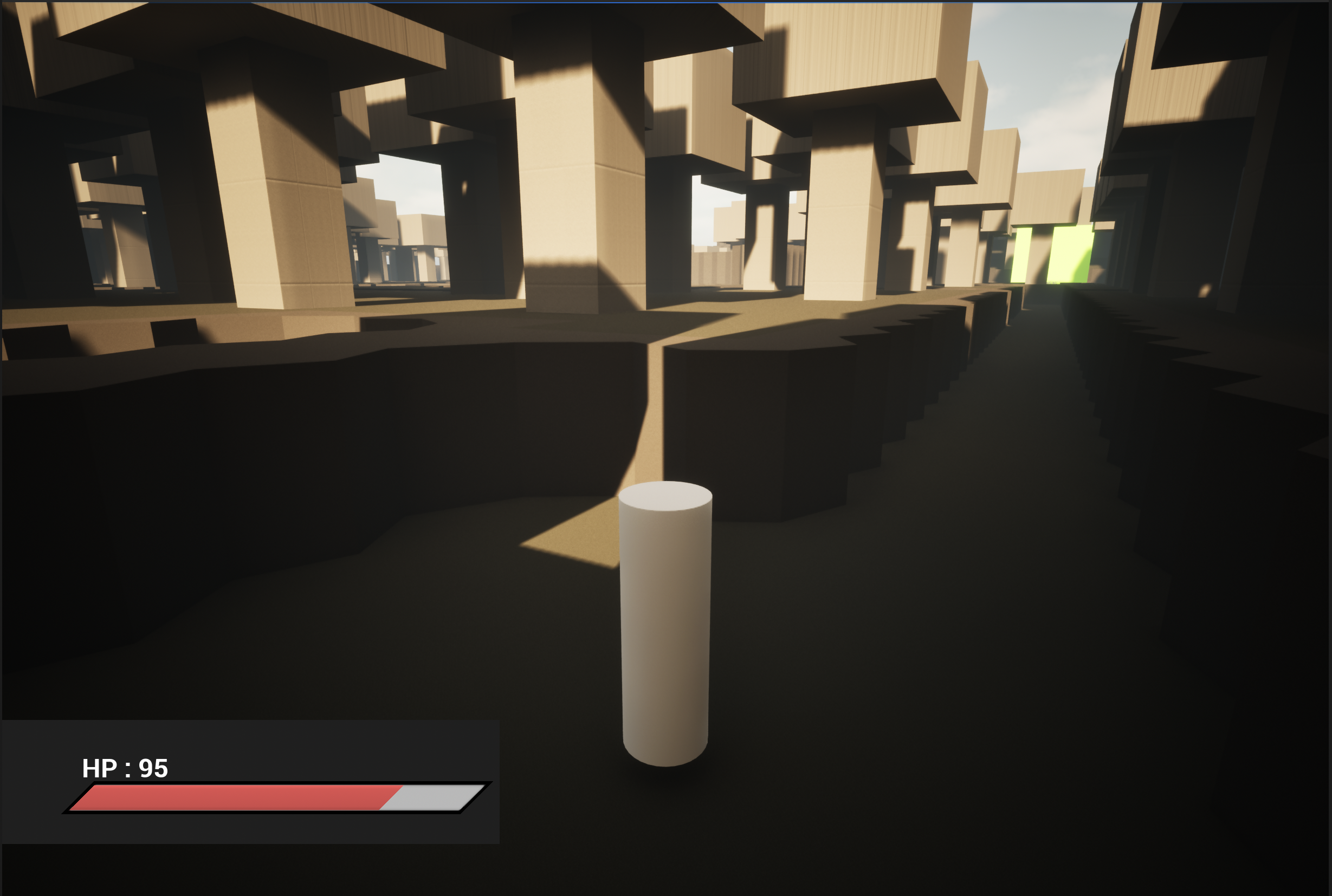 Early blockout of Area 1.
In early April, I finished the blockout for Area 1 and began bringing in higher-fidelity assets and textures. Because I was mimicking my prototype’s exact layout, the process was quick. However, I soon discovered a major flaw: The overworld felt like a hallway between fights.
No matter how many different routes, hints, or optional items I added, the problem persisted. Once the “optimal” route became clear, a player could safely ignore the rest of the map and rush the boss. While fights provided HP pressure, they lacked individual meaning. I realized that for exploration to matter, every encounter had to change the state of the world.
Alert & Support: Making Every Fight Count
To solve the “Boss Rush” problem, every Area Boss now tracks two dynamic values: Alert and Support. These systems create a constant strategic “push and pull” for the player.
Part 1: The Alert System
In the original prototype, resting at a bed restored HP but reset all enemies. A mechanic that works for Souls-likes but stalled progress in a tactical game. Now, resting no longer resets the map. Instead, it increases the Boss’s Alert Level.
The Alert Level has three tiers that directly buff the final boss:
- Tier 1: Permanent Accuracy Buff
- Tier 2: Permanent Strength Buff
- Tier 3: Boss takes the First Turn
Resting is no longer a “free” restore or a punishing reset. It’s a tactical trade-off. Do you fight the next encounter at low health, or do you heal and face a stronger Boss later?
Part 2: The Support System
The Support System is the counter-balance. Every Area Boss starts with a full Support Level tied to the enemies scattered across the map. By defeating these encounters, you are effectively “de-powering” the Boss. At high Support tiers, the Boss gains potentially devastating abilities:
- Tier 1: Health Potion Card
- Tier 2: Dismantle Shield Card
- Tier 3: Sleep Card
Now the player must decide: How much risk am I willing to take on in the final fight? Do I defeat more enemies to remove the “Sleep” card, or do I rush the boss before they gain the Tier 2 Strength buff?
Macro Tactics: The Spyglass
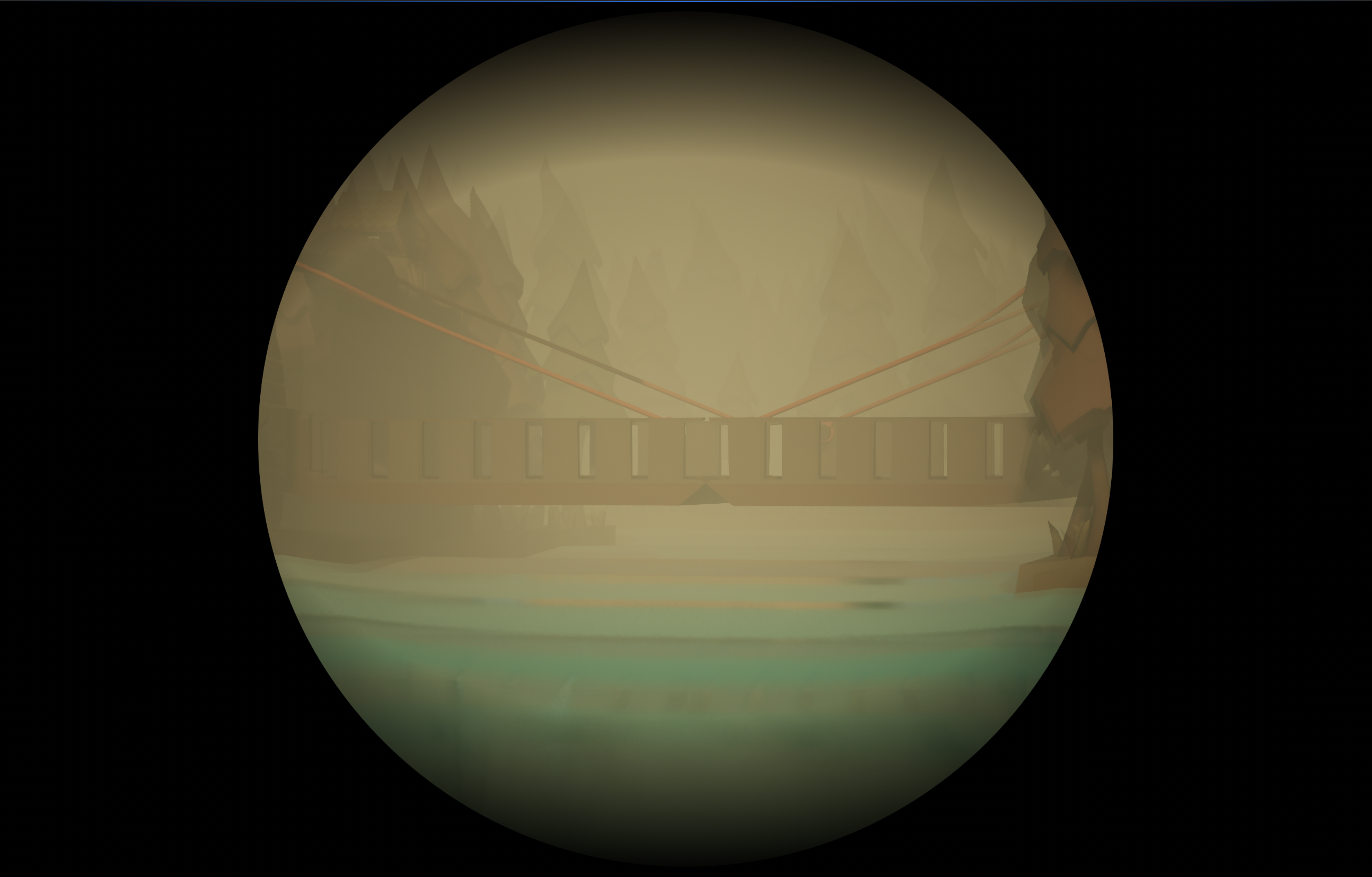
To navigate these systems, players need information. In a traditional top-down adventure, your situational awareness is limited to your immediate vicinity. To fix this, I added the Spyglass.
The Spyglass allows you to shift into a first-person perspective to scout routes, plan movements, and gather intel. When looking at enemies, you can see exactly how much “Support” they contribute to the Boss. When looking at devices like the drawbridges in Area 1, you can see exactly how many Power Runes are required to activate them.
This turns the overworld into a puzzle. You aren’t just walking; you’re “scouting” the level to decide which fights are worth the HP cost and which bridges are worth your limited Power Runes.
Micro Tactics: The “Tabletop” Pulse
| NPC Blue | Trap Red |
|---|---|
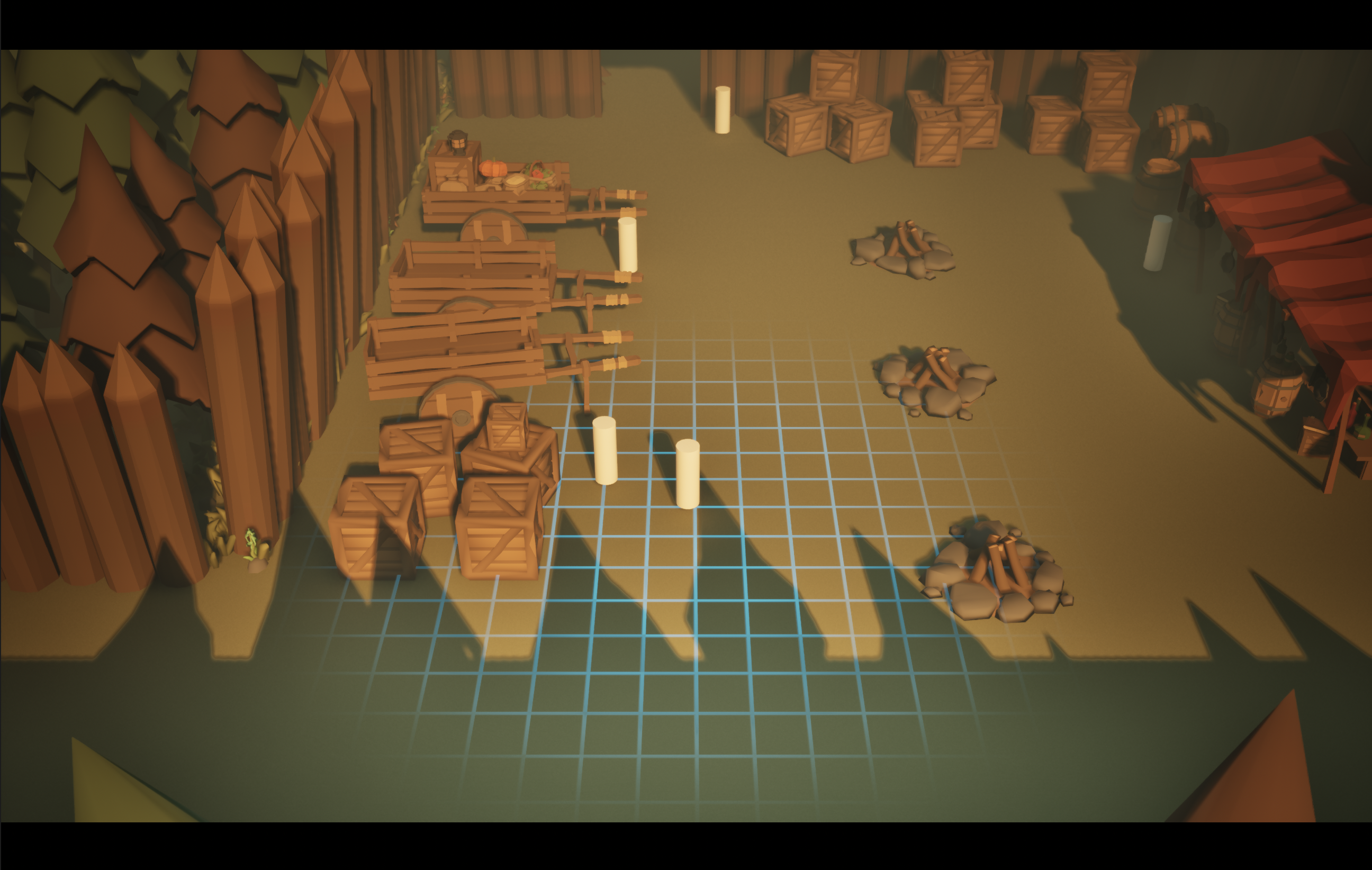 | 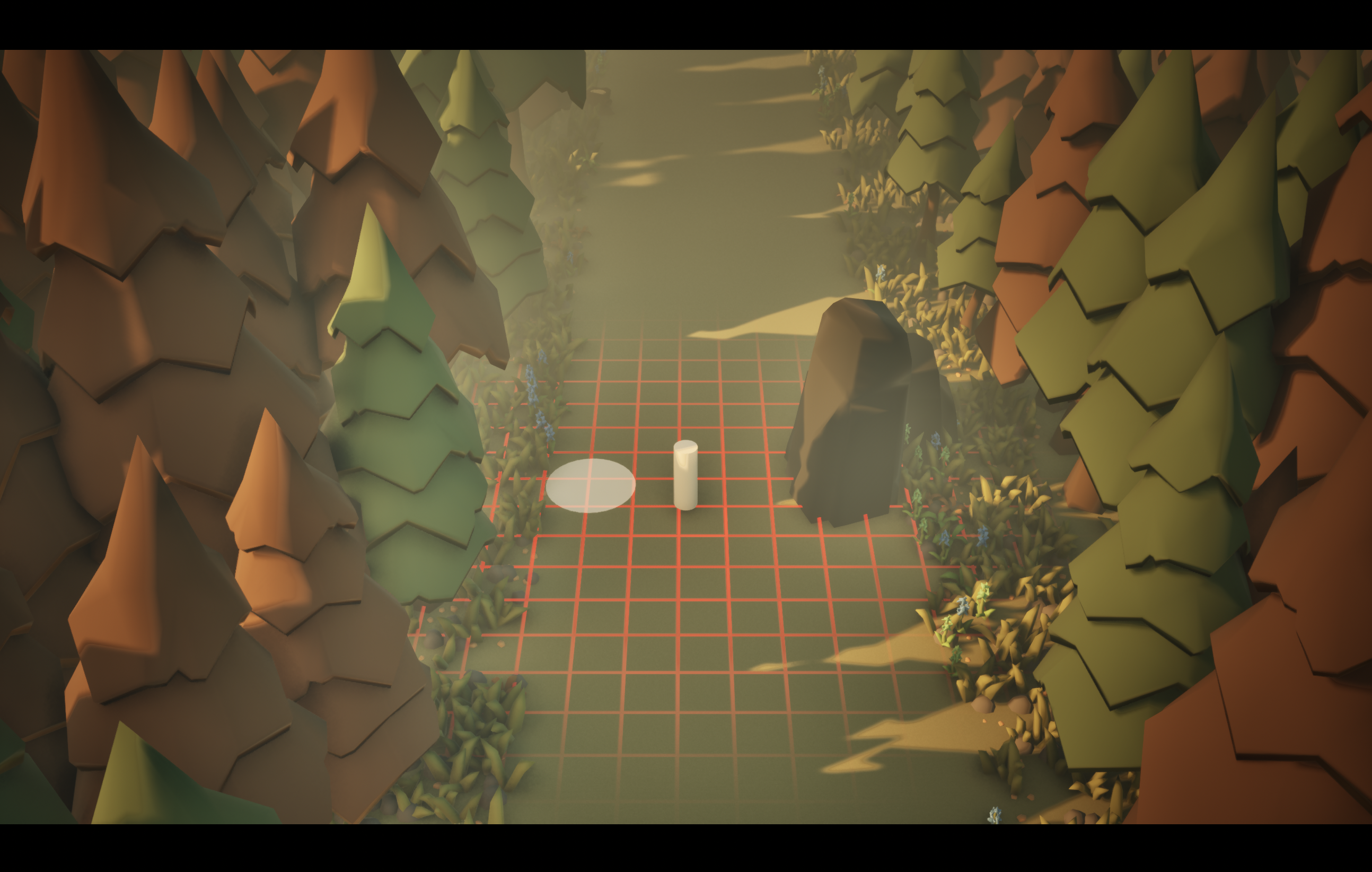 |
While the Spyglass handles macro-planning, I wanted the “moment-to-moment” walking to feel tactical as well. I’ve always been inspired by traditional tabletop games, and I’m leaning into a “tabletop come to life” aesthetic. To support this, I added a dynamic Sensor Grid that follows the player.
The grid acts as a short-range scanner for objects in the world and shifts color based on nearby objects:
- Gold: Collectible Item / Treasure
- Red: Enemy Encounter / Trap
- Blue: Interactable NPC
- Muted Green: Default / Safe
When you’re walking down a path or through dense foliage, the grid might begin to pulse Red. You know a trap or enemy is nearby, but you might not be able to see them yet. This creates a great tension: Long-range scouting tells you where you want to go, but the grid keeps you honest about the dangers right under your feet.
Note: For accessibility, I am implementing a toggle to show icons above the player’s head so these cues aren’t strictly color-dependent.
The Power Rune Economy
Finally, let’s talk about Power Runes. Think of these as magical, reusable batteries. In Area 1, they power drawbridges; in future areas, they might power lifts, boats, or ancient machinery.
The unique selling point here is that Power Runes can be retrieved. If you find a hidden route that lets you bypass a bridge you previously activated, you can backtrack, grab your Rune, and bring it forward. This is a direct nod to the “Lock and Key” puzzles of the Resident Evil series. Observant players who manage their Rune inventory effectively might even be able to carry a surplus into the next Area, gaining a massive head start.
What’s Next?
It’s exciting to finally have these systems talking to each other. The overworld is no longer a hallway, it’s now a living opponent. The next step is finishing the final assets for Area 1 and prepping a fully polished demo for play-testing.
See you in the next one.
Up Next: TBD